90 days. 85 public posts. Get your money back.
ShowUp90 is a 90-day posting practice for building the habit of being seen. It's always open — you can start as soon as tomorrow.
No scripts. No fancy lighting. No niching down. No viral formulas.
Just the one skill that matters: staying yourself when the camera turns on.
Take the bet— JJ Kamholtz, ShowUp90 Graduate"It's like giving up an addiction. You have to be ready, and you have to want it. But mostly, you have to believe that you can change — and that you're worth it."
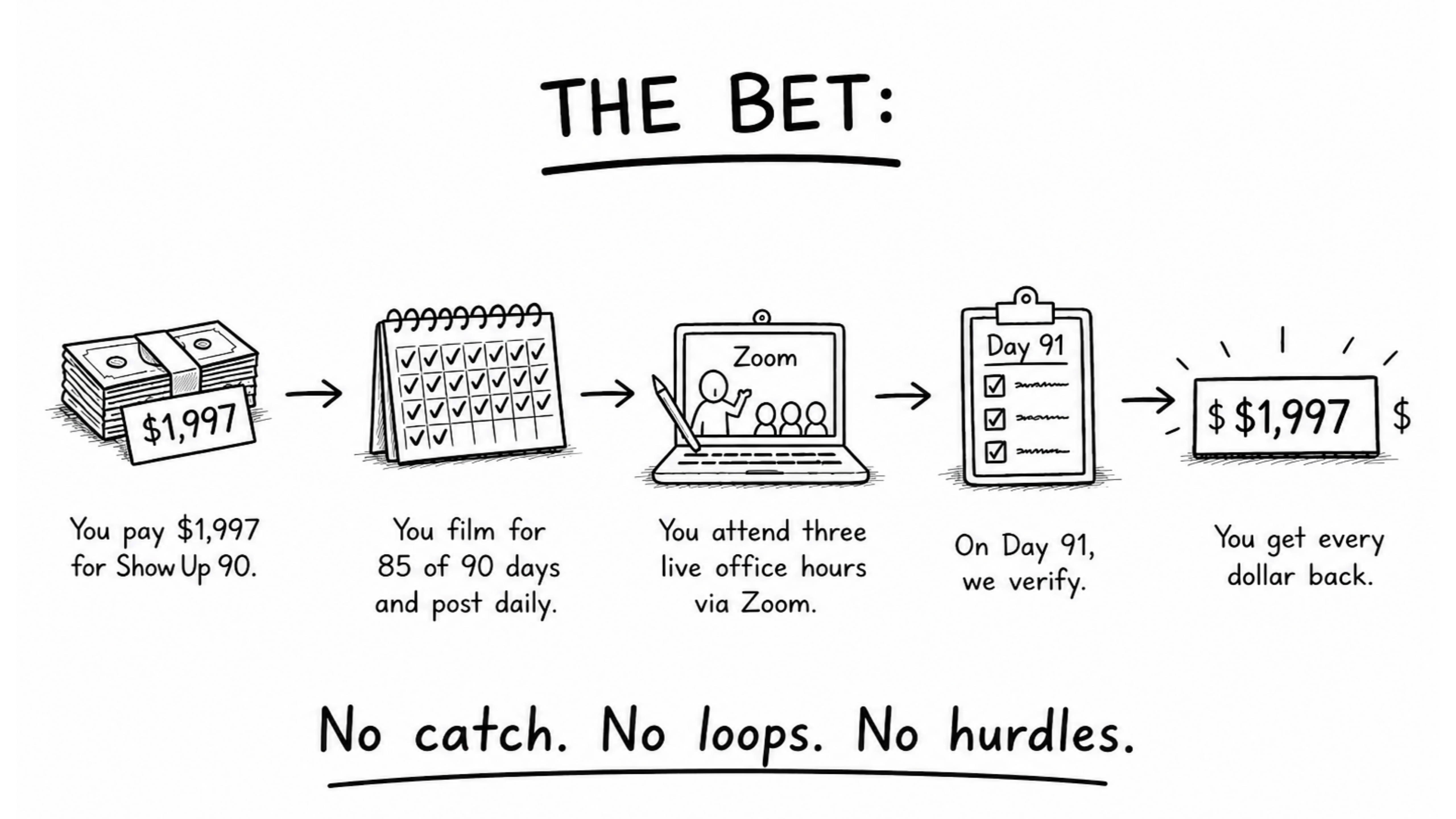
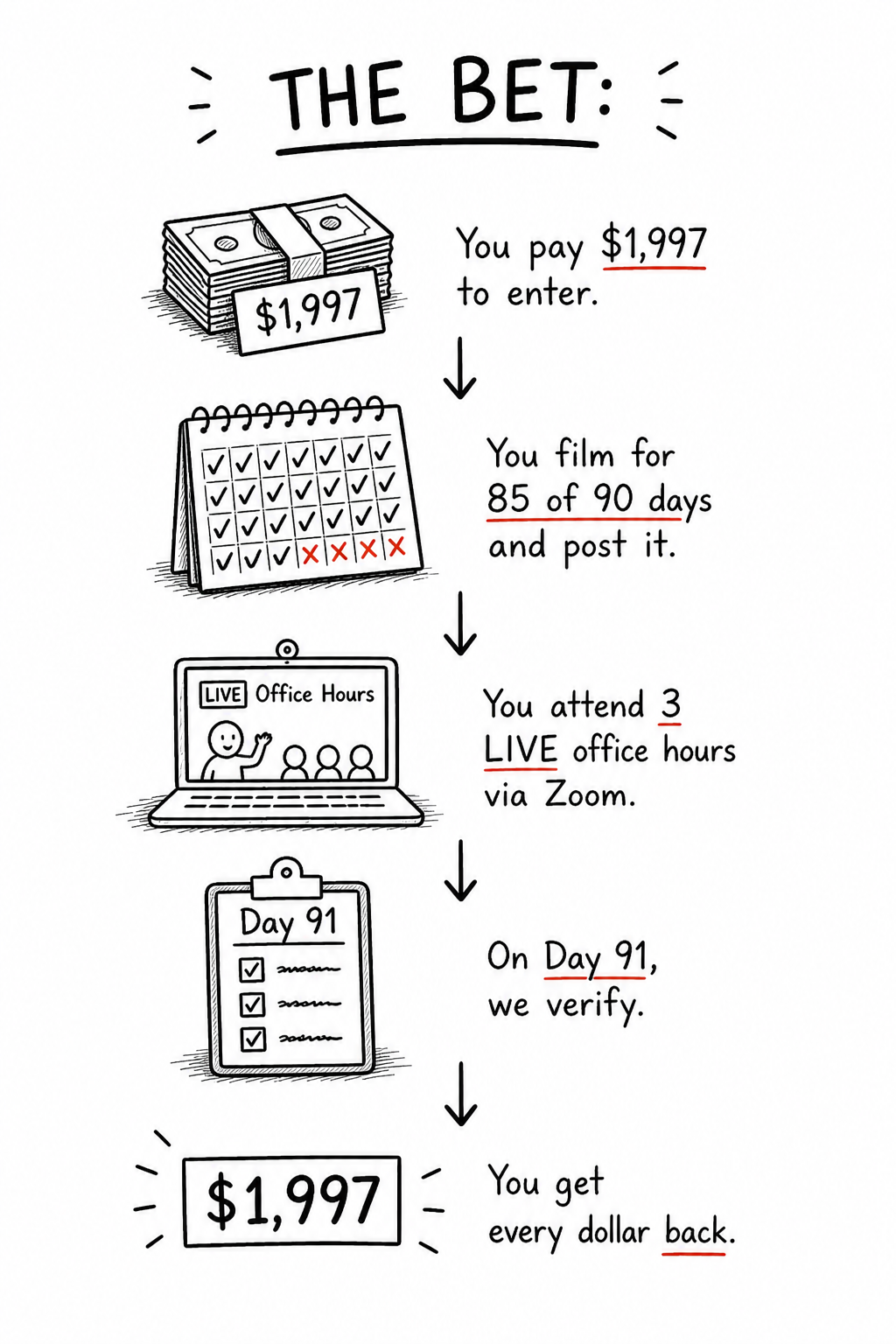
The bet, in 20 seconds
Always open. 30 new spots each month. Join today, start tomorrow.
For the offer you want to launch, the audience you want to grow, the point of view you're ready to own, the next chapter you keep almost starting — ShowUp90 is the practice underneath all of it.
Nothing else moves until you do.
From me to you
Two reasons I'm willing to put $2,000 on you.
First — because of what the students do.
100+ people have already done the reps. The receipts:
And — because I've done it myself.
Five years of running the same practice on my own life. The receipts:
You are one video away.
A text from a student mid-90
This came in from Hubert — currently in the middle of his 90 — on his 31st birthday.
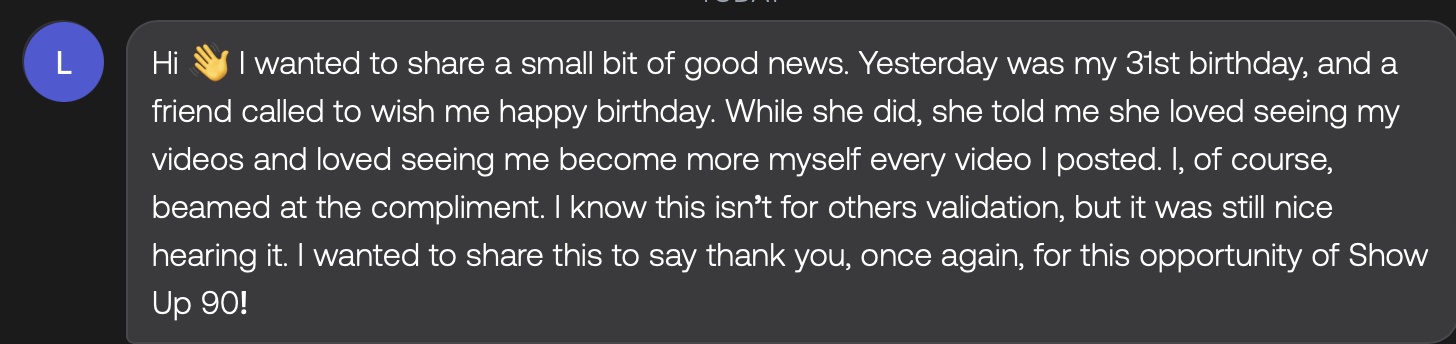
— Hubert · ShowUp90, currently mid-practice
You don't have a "content problem".
You have a being-seen problem. A being-known problem. A "no one will care what I have to say" problem. A "people will think I'm cringe" problem.
That's why the templates feel weird. That's why the hook formulas make you want to disappear. They're not just asking you to post. They're asking you to perform someone you're not.
So I'm not betting that a program magically changes your life. I'm betting that if you actually show up in public for 90 days — as yourself, not as the version the internet rewards — you won't be the same person at the end of it.
I want you to walk away with everything.
I trust the program enough to hold the risk for you until you can.
"Can you put a price on self-confidence?
Because that's what I got out of this."
— Jenny Dahlberg, ShowUp90 Graduate
Same people. Same camera.
Different relationship with being seen.
"I've literally quit everything I've ever started…
This is probably the first experience where I did 90 videos."
— Alston Feggins, ShowUp90 Graduate
What you're actually doing right now
You're scrolling for ideas. Saving hooks to a folder you'll never open. Screen-capping formats that worked for someone you don't know. Following accounts that promise to help you go viral, stop the scroll, crack the algorithm.
You're being told your lighting, mic, camera, hook, edit, face, and format all need to be better before you're allowed to begin.
So you film things you never post. Post things you delete an hour later. Rewatch yesterday's video to see how it's performing. You mistake the dopamine of consuming content strategy for the discipline of making anything.
That's outside-in.
Every input is external. Every reference point is someone else. Every measure of whether you're doing it right comes from a number you don't control. Likes. Views. Follows. Saves. The algorithm's mood that day.
Your face, your voice, your point of view, the actual you — all of it becomes secondary to one question: will this perform?
And there is an entire industry built to keep you there. The personal-branding, become-an-influencer industry. The faceless-content machine. The gurus selling 47 hook formulas for $9.
They're all selling the same thing: a smaller, digestible, relatable version of yourself that performs better.
You've been buying it. Most of us have. You didn't invent the cage. You were handed it the day you created your Instagram account.
It is not a content strategy. It is a 90-day refusal of the system that's been training you to disappear — replaced with a daily practice of doing the opposite.
What the first stretch will feel like
The first stretch will feel clunky. Good.
You're stopping a behavior you've been practicing for years. You're still going to ask, "But what do I talk about?" Then you'll sit for one second and realize you already know. You're going to want to refresh the analytics. You'll close the app instead. You're going to film something honest and feel certain it's the worst thing you've ever made. That's not failure. That's the old habit breaking.
The clunky early days are proof you're doing something different. If it felt easy, you'd probably still be doing the old thing.
The practice
This is not a content course — it's exposure therapy for being cringe online.
Every day, you put your face, your voice, your work, your point of view — your actual self — into the world.
Not perfectly. Not professionally. Not performatively. Not with a 17-part content strategy.
That's the whole rep.
Every morning, I send you a short coaching video with a frame, a prompt, or a directive for that day's rep — fresh that morning. No advance access. No batching a week ahead. No pre-scripting tomorrow. The prompt arrives, you respond. You watch it, make the thing, and post before the old voices talk you out of it.
Day 10 sample — the kind of prompt that gets you out of your head and into the rep.
Just you, a prompt, and the willingness to full fuckin' send it.
By Day 90, you'll have introduced yourself to the internet at least 85 times. Most will be personality bicep curls — reps that make you stronger. And some can open doors. The DM. The lead. The collaboration. The "holy shit, you read my mind" comment. The moment somebody knows what you're about.
The economy of it
A huge part of ShowUp90 is dramatically shrinking the amount of time you spend on content. Most students arrive as experts at 10 drafts. By Day 30, they're shipping in one — not because their first take is suddenly perfect, but because they've learned it's enough.
"I love it because of the simplicity that keeps me from trying too hard. I am an expert at 10 drafts. My camera roll is embarrassing tbh 🫣 — but that first exercise I posted was such a light bulb moment. It was so uncomfortable. The second I ended the recording, my first instinct was to do another draft. And I didn't realize how immediate that thought was. Sitting in that discomfort was so needed but I was avoiding it the last 6 months of posting content. Realizing already that it's worth feeling the feel versus creating overwhelm with just 1 more take."
— A ShowUp90 student, mid-practice
Voices from the practice
"I could feel all the somatic tension in my body. I could feel my heart starting to race. And I'm noticing that I don't feel that anymore. I just noticed that today."
— Sera, ShowUp90 Graduate
"I don't have to script myself. I don't have to have that vice grip on my voice and my message. It can just be authentic and flow and real and be present."
— Nicole, ShowUp90 Graduate
"I realized that showing up as myself is enough. And now posting is what closes the loop — not the views, not the comments. The content itself is the closed loop."
— Ellie, ShowUp90 Graduate
"I was muted, calculated, careful — now I'm bright and feral. The shift has been so much more than social media."
— JJ, ShowUp90 Graduate
Office hours
You cannot rewire a social pattern in private. The trigger has to be present for the practice to count.
Once a month, we meet live. Start times rotate every month — 9am, 11:30am, and 4pm ET — because nobody should have to become nocturnal three months in a row. ShowUp90 has students in 10+ countries across 4 continents. We build the room like that's true.
The next three sessions in the room
Your 3 required sessions fall inside your 90-day window.
Bring me an actual piece of your content and we'll watch it together. I'll tell you what I see, what's working, what's missing, and what to try next.
Bring me the freeze you can't name and we'll name it. Bring me the thing you keep almost saying and never quite saying, and we'll work on why.
This isn't a Q&A. It isn't a webinar. It's live creative direction for the exact place you're stuck. Sometimes it's feedback. Sometimes it's a framework. Sometimes it's one sentence that makes the whole problem rearrange itself.
And even when it's not your video on screen, you'll hear the thing you needed anyway.
We've reviewed student videos in Hebrew. In German. In Spanish. Translation open. Whole room watching. Still found the thing: pacing, energy, presence, the place the story stopped letting us in.
The rest of ShowUp90 is purposefully solitary. The real rep happens alone — in your apartment, on your phone, before anyone claps. Office hours are the exception: a small, intimate room for the thing you're usually doing alone.
The room is warm. Weird. Specific. Sometimes laughing. Sometimes dead serious. Nobody gets flattened. Everyone gets met where they actually are.
"Thanks for that permission. I'm so surprised I'm having such an emotional reaction. Maybe I'm just allowed to do it this way."
— A ShowUp90 student
Live attendance is required to qualify for cashback. But the cashback isn't the reason to come. The holy-shit moment is.
Why now
The frameworks pile up. The shoulds compound. The voices telling you to go viral, stop the scroll, niche down, batch content, optimize hooks, build a personal brand — they crowd into the place where your own voice should be.
You think the plan is to figure it out and then start. Get clearer first. Find the right angle, the right idea, the right moment.
That's not how this works.
The longer you wait, the more there is to clear out before you can even begin. Showing up doesn't get easier the more advice you collect. It gets harder.
You're not running out of time to start.
You're running out of you to start with.
ShowUp90 is $1,997 to put on noise-canceling headphones for 90 days.
To stop looking. Stop scrolling for someone else's answer. Stop layering new shoulds on top of the ones already in your head.
You're not paying for a course. You're paying for enough space to hear yourself again — and enough repetition that you start trusting what you hear.
The new scoreboard
For 90 days, you stop measuring yourself by the things that have been making you smaller.
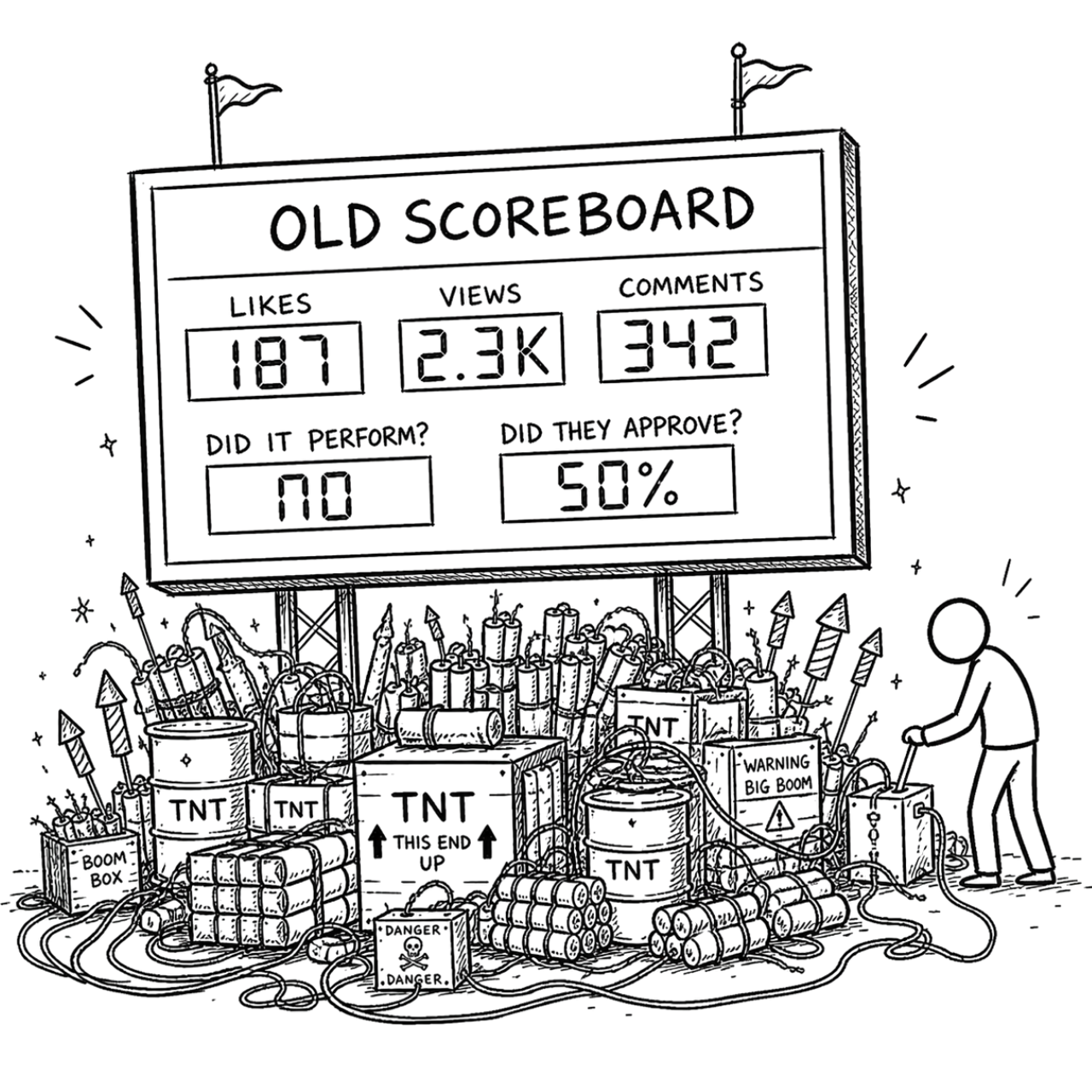
The new metrics are quieter. They sound like this:
Four questions, end of every day
For 90 days, these are the only scores you keep. You've been outsourcing them to a feed that can't see you and an algorithm that doesn't care.
Inside ShowUp90, you take them back. You answer them. Then you watch what happens when those are the only scores you keep.
The numbers that change you are not the numbers the algorithm rewards.
For 90 days, the algorithm doesn't get a vote. You stop optimizing for views. You stop optimizing for follows. You stop optimizing the mask. You just take it off.
This is not $1,997 for more content advice. This is $1,997 to stop listening to all of it for 90 days.
For 90 days, we replace the broken goal system. Not likes. Not views. Not whether strangers approve. Just: did you show up?
Three rules. That's the whole game.
No quiz. No essay. No "tell us how you grew as a person." Did you post — yes or no. Were you in the room — yes or no. Your cashback goes out within 14 days.
If you do the work, you literally cannot lose money.
Every piece of this exists to keep the outside noise out long enough for your own voice to come back online.
Skin in the game.
The part that makes hiding more expensive than showing up.
The mechanic, restated
You pay $1,997 today.
Post 85 of 90 days. Show up to 3 office hours.
Day 91, every dollar comes back to you.
You cannot lose money on the first one.
You can lose something much bigger on the second one.
The money is the smallest thing on the line.
We cap each month at 30 starts because office hours have a working size — the live room only works if everyone in it can be seen. This isn't a cohort: there's no group to wait for. Grab one of this month's spots and you start tomorrow. Only once the month's 30 are taken do new starts roll to the next month.
Or 3 monthly payments of $697. Total paid: $2,091. Day 91 cashback: $1,997.
Before you ask —
Yes. Every post is you, face in frame, speaking to the lens. Not a voiceover. Not a montage with your face at the end. The freeze we're rewiring lives in that exact moment — eyes on the lens, saying the thing — so that's the rep, all 85 times.
Walk-and-talks count. Messy hair counts. One take counts. What doesn't count is anything that lets you hide behind the work instead of standing in front of it. (And yes — show your art, your product, your process too. Just talk to us about it.)
Talk about anything — your business, your art, your actual life. The prompt is a lens, not a topic: it shapes how you look at your day, not what your day is about. The only rule is that the day's post comes through the day's prompt.
Want to post more that day about whatever you want? Go for it. ShowUp90 is the floor, not the ceiling.
A public, permanent post on a public platform — with you talking to camera — that responds to that day's ShowUp90 prompt. Reels, TikToks, YouTube Shorts, LinkedIn videos, Threads, Substack Notes — any platform where the post stays up and can be linked counts. Stories don't (they disappear). Reposts don't (not yours). AI-generated content doesn't (also not yours). Anything that violates the platform's community guidelines doesn't (it won't stay up). You log each one as you go in the tracker we send you on Day 0 — that's the document you submit on Day 91 to trigger cashback.
Use the one you have. The whole point is stakes — posting in the context of your real life, where your real people are. Not a quiet alt where you've blocked your mom, your aunt Susie, your old boss, and your best friend's hot cousin. That's not a rep, that's a rehearsal. The freeze you have on your real account is the freeze we're working on.
And if you've got a business, an offer, or a thing you sell — even better. You don't need a separate account for it. The whole game is building a face-forward, human, trustable presence — and whatever your business or product is (or becomes), it benefits from the visibility, the exposure, and the version of you that comes out the other side of 90 days of being seen.
Never posted before? A new account is your only option — give it your real name and let your real people follow.
The bet is off. You keep the program, the office hours, the year of access — all of it. But the cash back doesn't trigger.
This part has to be real for the bet to mean anything. I'm not running a "well, you tried!" program. The whole point is that the line is the line.
You fill out the self-tracker as you go: date, link, one-line note. On Day 91, you submit it. We click through and confirm the posts are live on the days you said. No essays. No "tell us how it changed your life" application. Did you post on 85 of 90 days — yes or no? Your cashback goes out within 14 days.
What it looks like
Most coaching pages can't tell you what you'll feel on Day 1, because Day 1 of most coaching is reading a PDF. Day 1 of ShowUp90 is hitting record.
Everyone's timeline is a little different, but the shape is usually the same.
The day you buy. Onboarding hits your inbox within the hour — welcome materials, your tracker, the heads-up for tomorrow. There is no "I'll start Monday." No "once life calms down." Day 1 is whatever day comes next. You can't build a habit like this in a vacuum. The point is to run it through the actual mess of your actual life.
You film your face. You post it. You've now done the thing you've been avoiding for two years. The bar is on the floor. That's the point.
You have reps behind you. Maybe more than you've had in months. Not because they're perfect — because they exist. The friction between "I have a thought" and "the thought is on camera" starts to shrink.
The thing that used to take two hours and four re-records might take seven minutes. You stop apologizing inside your videos. You stop editing out the ums. The voice that used to talk you out of posting is still there — but you've started posting anyway.
Around here, a lot of students notice something they didn't expect: they like themselves more when they're being themselves. This isn't audience response. This is internal. It's the thing that compounds.
You've introduced yourself to the internet (at least) 85 times. You know what your point of view sounds like out loud. You've interrupted the pattern that's been costing you years. And the bet pays itself out.

The Inside Line
Most of ShowUp90 happens in public. The post is on the feed. Office hours happen with other people in the room. The tracker is what you submit on Day 91.
The Inside Line is different.
It's a private text-based check-in we send you throughout the program — a prompt, a question, a nudge to notice what the rep is doing to you. Your responses go nowhere but to you. Not to the feed. Not to the algorithm. Not to me.
It's the only piece of the practice that isn't performed for anyone.
I'm not making you prove to me that you deserve your money back. The Inside Line is where you prove it to yourself, if you want to.
The feed gets the post. The Inside Line gets the truth.
Real grads. Real numbers. No growth hacks.
These are actual follower counts pulled directly from ShowUp90 graduates who stopped performing and let an audience find them.
The irony: getting your money back has nothing to do with hitting any of these numbers — which is probably exactly why people hit them.
Chris posted a video on Day 37. He went to dinner. He came back to 30,000 views:
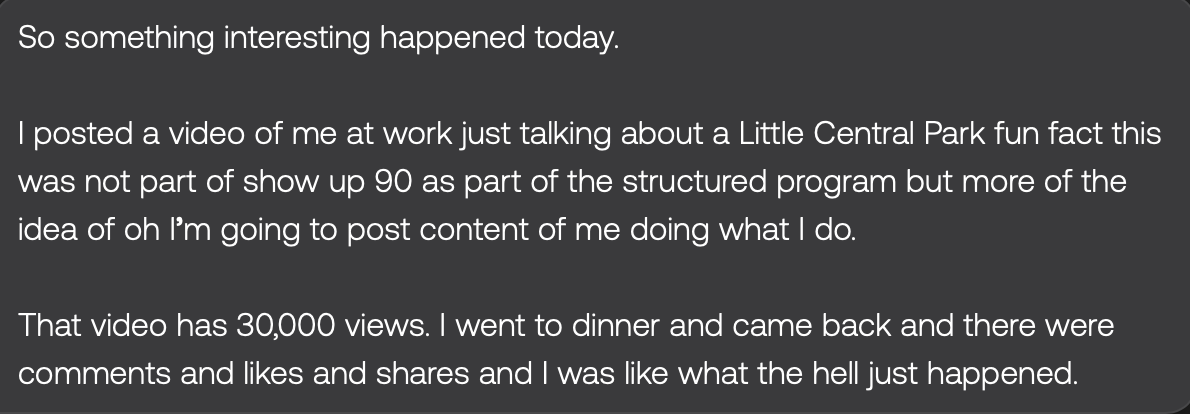
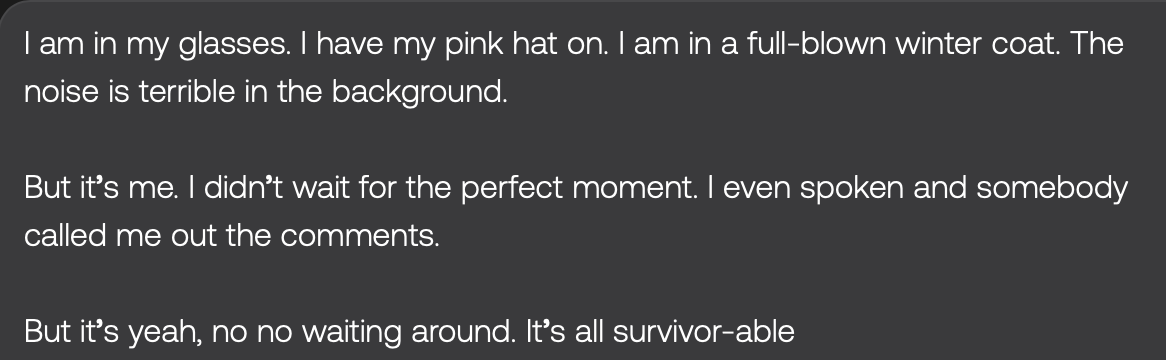
Then it kept climbing. 30,000 became 1 million+ views and 100K+ reactions — and that one reel didn't stop until it passed 4.2 million. All from a single Day 37 video.
Who this is for
The gap between what you want to put out and what you're actually putting out is costing you something specific.
Be honest with yourself. If any of this is true, save your money.
"What was once terrifying for me
is now… kind of fun."
— Sera Bak, ShowUp90 Graduate
You don't need another content strategy, niche exercise, or algorithm hack. You need public reps.
Because you can't rewire a social pattern in private. The trigger has to be present for the rep to count.
If your main goal is getting your money back instead of changing your life, this is probably going to be a strange 90 days for both of us.
No matter where you're starting, there's probably someone below who knows that particular flavor of stuck — and made it through.
Taylor runs The Daycare Method — a business helping home daycare providers build and run their programs. She had a polished feed, a clear niche, and every piece of strategy she could need. But she knew something was missing.
Her baseline scores told the full story: a 3 out of 10 on feeling fully expressed. A 4 out of 10 on safety being seen. Her default creative state? "Forcing it with strategy." She wasn't making content. She was performing it.
By Day 2, something was already shifting. Taylor started showing her face. Sharing her voice. Letting people in beyond the curated daycare photos. By Week 3, she hit 10,000 followers. But the number that stopped her wasn't the follower count. It was a comment. Someone called her by name.
By mid-November, Taylor's sales had doubled. But the way she described it told you everything about what actually changed:
No ads. No funnel optimization. She was just being Taylor — and people could feel the difference. Strangers started DMing her, thanking her for videos that made them feel seen.
By her final check-in, every single metric was a 10. Congruence: 10. Fully expressed: 10. Safety being seen: 10. Default creative state: "Fully open channel — I'm in flow."
The woman who started at a 3 out of 10 on self-expression ended at a 10. And the shift wasn't just online:
8,200 → 20,000 followers. Sales doubled. Enrolled in Round 2.
"Before Show Up 90, I hid behind the desire to be liked by everyone. Now, I don't need to be liked by everyone and find so much more value in being loved by few."
— Taylor Rivera, The Daycare MethodCindy wasn't hesitant about the camera — she was actively opposed. Her husband kept telling her to make videos. She said no. Every time.
What made her say yes was a quiet recognition: the woman who showed up in private and the woman who showed up in public had become two different people. She was tired of it.
The first 30 days were exactly as uncomfortable as she expected. She thought she looked stupid. She didn't want to show her face. The cringe was real. But she'd made a commitment, and she kept it.
By Day 30, the awkward phase started to lift. Not because she'd gotten perfect — but because she'd done enough reps that being on camera stopped feeling catastrophic.
Around Day 60, strategy started to click in a way it never had from courses alone. The strategy had always been available to her. She just hadn't been regulated enough to use it.
The final 30 days were, in her words, the easiest. Her authentic self and her strategy had merged. The performance was gone.
Her husband noticed first. He said she'd come back — the unapologetic version of herself he remembered from high school.
The proof showed up off-camera too: a 30-minute conversation with a complete stranger at Target.
Unthinkable at Day 1. Unremarkable at Day 90.
"The first 30 days were about getting through the awkward phase. The next 30 were when things started to click. The final 30 were the easiest. My confidence changed so much — and I feel happy and fulfilled."
— Cindy Gomez, ShowUp90 GraduateApril came to ShowUp90 carrying a specific kind of frustration. She was nearly 40, established in her work, generally fearless in life — and completely undone by a camera. She knew it didn't make sense. She was furious about it.
She'd watched others build audiences for years, feeling like she'd come to it too late. The gap between her in-person authority and her on-camera freeze was causing real damage — not just to her content, but to her business visibility and her own sense of what she was capable of.
Her nervous system was so dysregulated under observation that she couldn't even access her own opinions on camera. She had strong views. She expressed them constantly offline. But when the camera was on, something locked up.
The breakthrough came when she made an off-the-cuff video about a bold opinion in her industry — something she would never have posted before ShowUp90. No script. No plan. Just a take.
It got 30,000 views across platforms and hundreds of comments.
Not because she'd learned a new tactic, but because she'd finally become regulated enough to show up without hedging.
Her definition of her own transformation is the most honest summary of what ShowUp90 actually delivers:
She is explicit that this is not a content strategy course. It is, she says, more on the therapy side than the content side — which is exactly what makes it work for the content side.
Lindsey wasn't a beginner. Four years of consistent content creation — and it had ground her down to almost nothing. Not from laziness. From the cost of performing someone she wasn't.
The moment that changed things came during the first Office Hours session. Lindsey was explaining everything she was carrying. I listened, then asked a simple, disarming question: why would it be a bad thing for people to reach out and genuinely ask if she was okay?
Then I looked at her directly and asked:
She lost it. Because she'd been holding up the "strong one" persona for so long — online and off — that she'd stopped letting herself answer that honestly.
In that moment, something broke open. She didn't have to be the strong one. She didn't have to perform a version of herself that could handle everything. She could just show up.
What Lindsey found at the end of 90 days wasn't a new content strategy. It was something she described as embodiment — the ability to be the same person online that she was everywhere else.
She describes ShowUp90 the way a lot of graduates do — not as a content program but as something closer to therapy. The difference, she says, is that you're not just talking about being seen. You're practicing it. Every day. Until it stops being scary and starts being you.
"It's like truly looking yourself in the mirror — not only being seen and heard, but allowing yourself to actually see yourself. I don't think until going through this container that I was able to truly embody that."
— Lindsey Walker, ShowUp90 GraduateIn their own words
Real people. Real videos. No scripts.
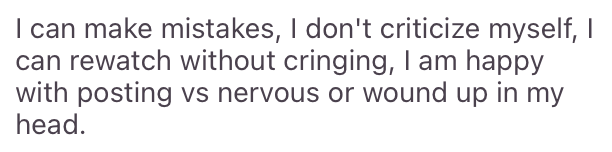
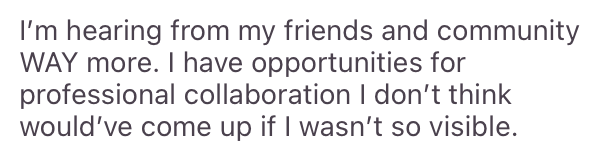
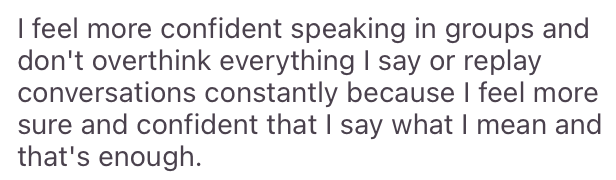
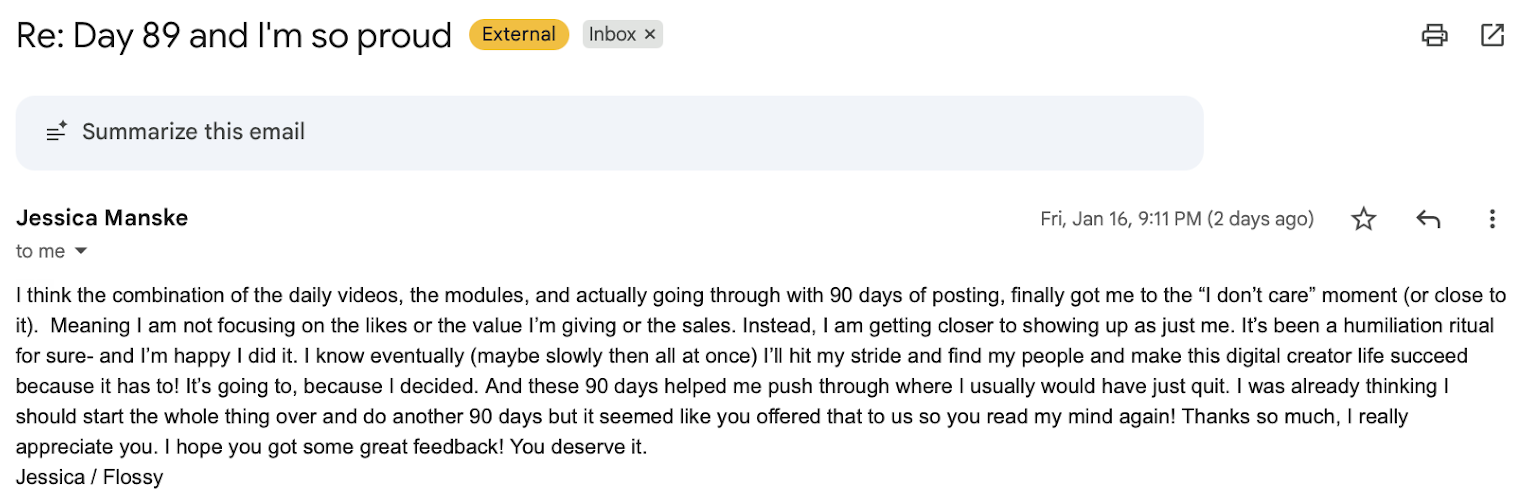
The receipts
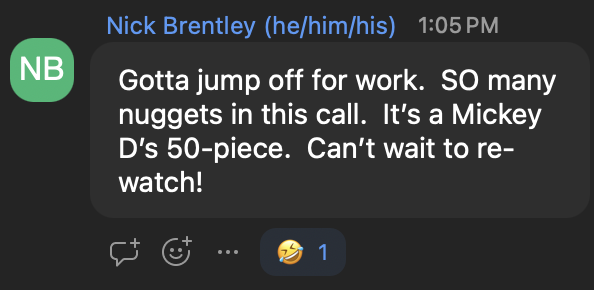
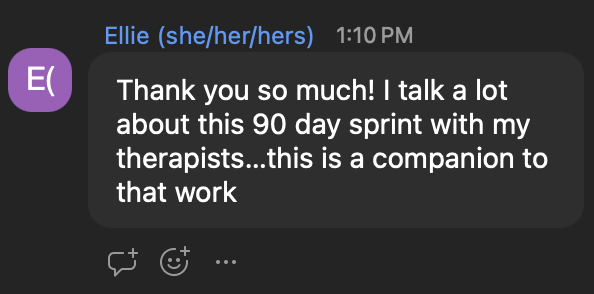
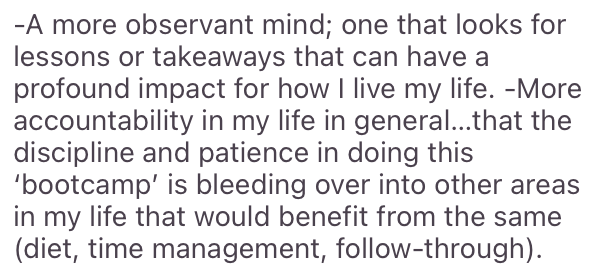
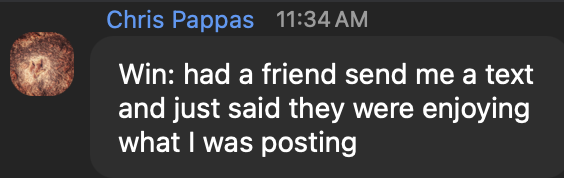
DMs, comments, texts, screenshots — straight from inside the practice.
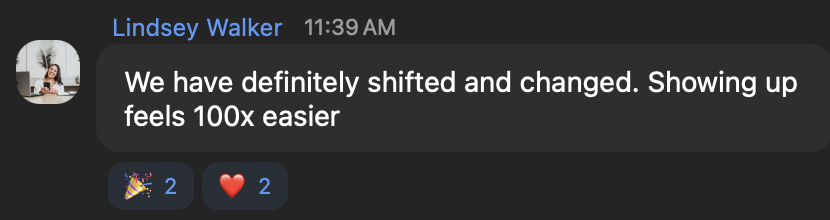

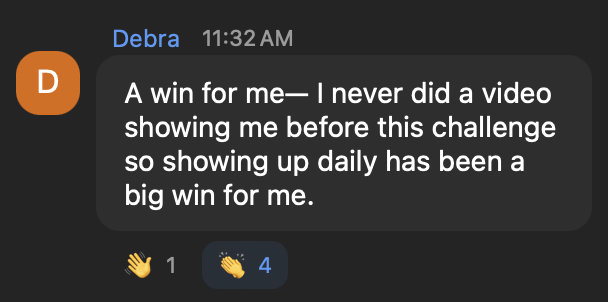
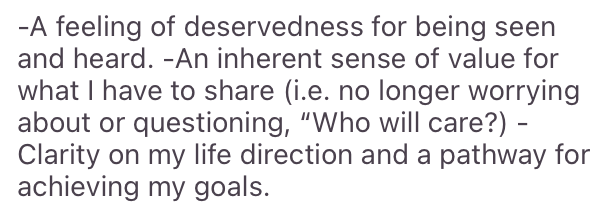
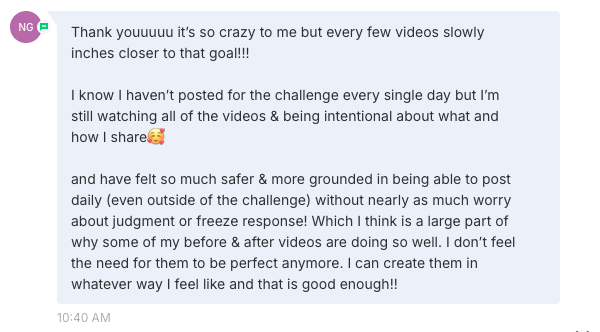

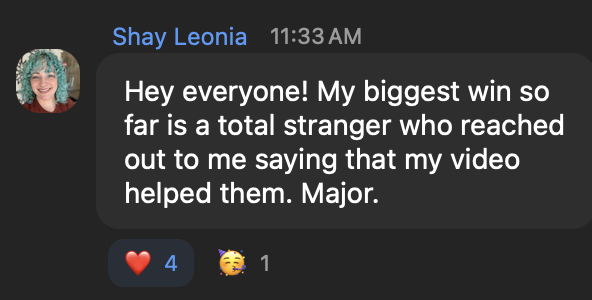
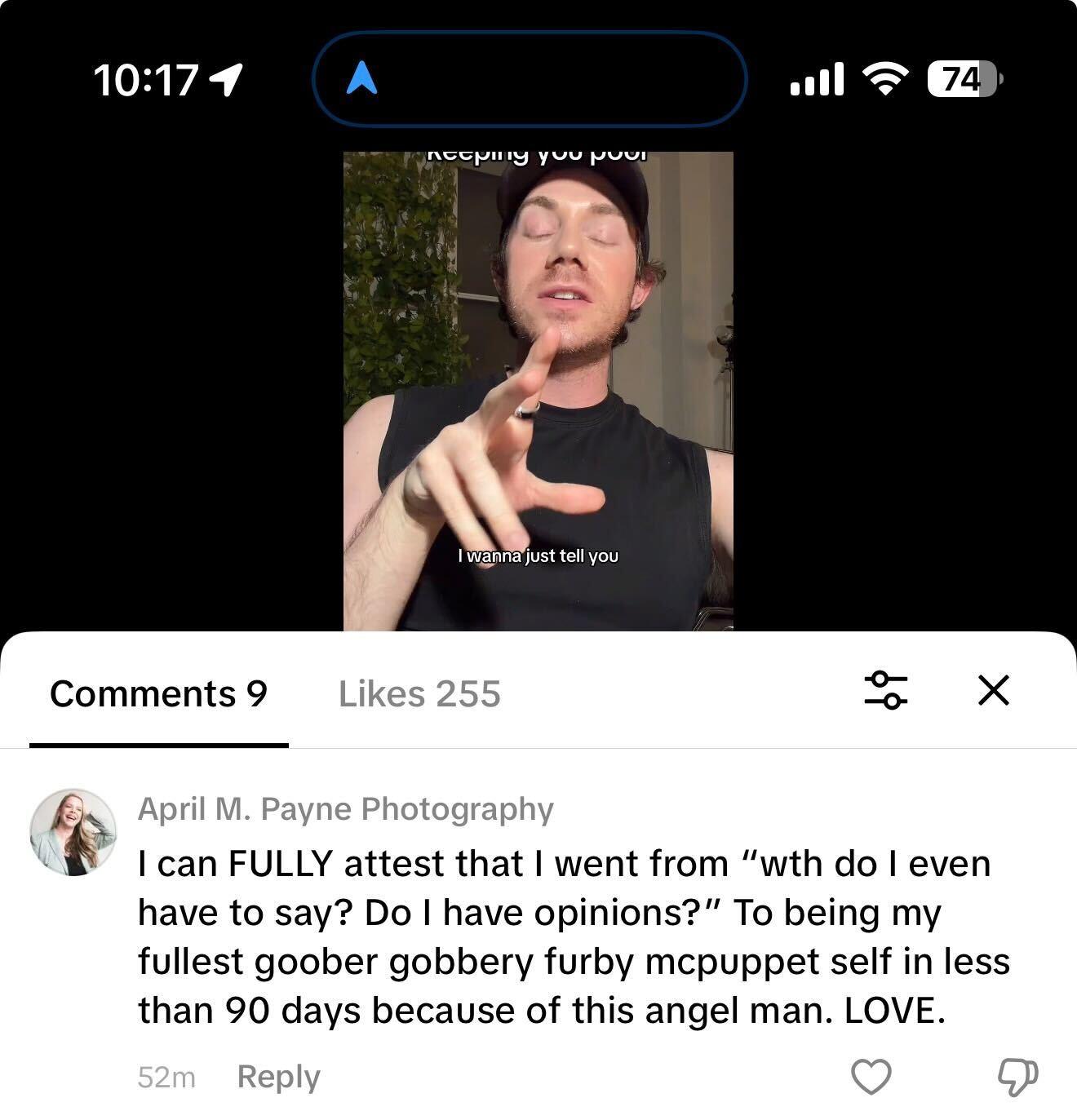
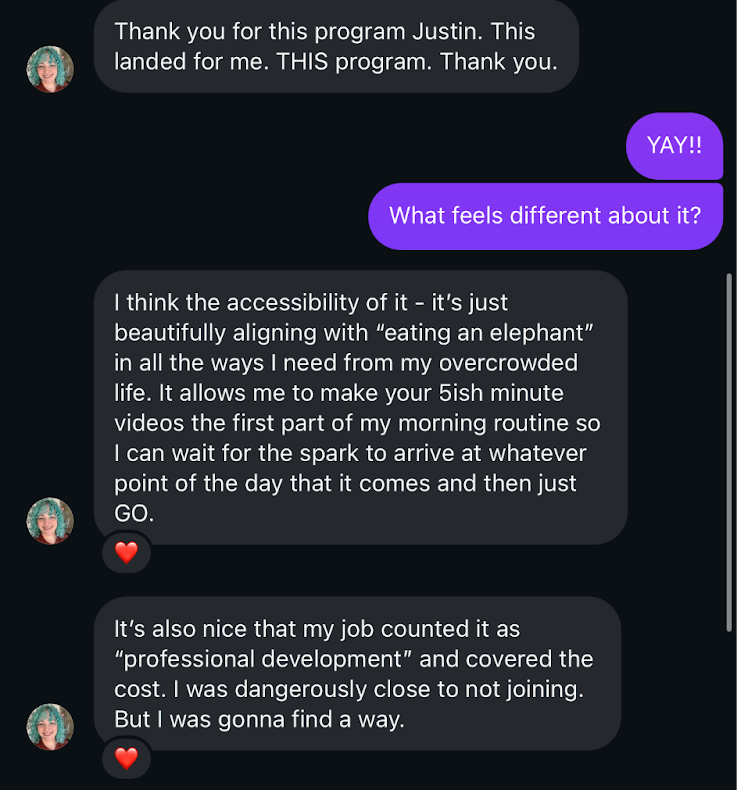
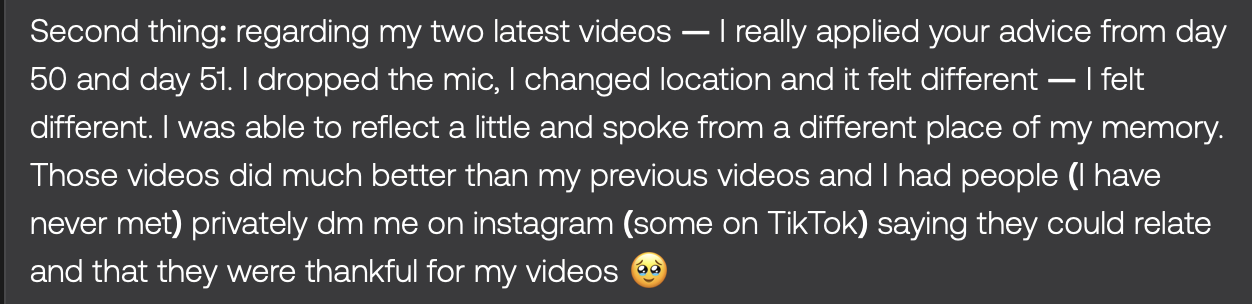

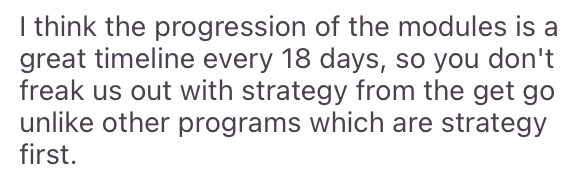
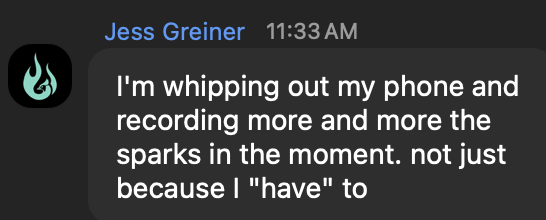

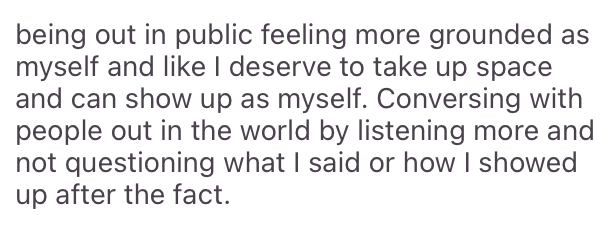
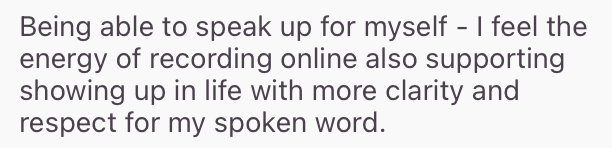
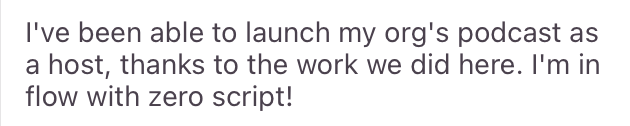
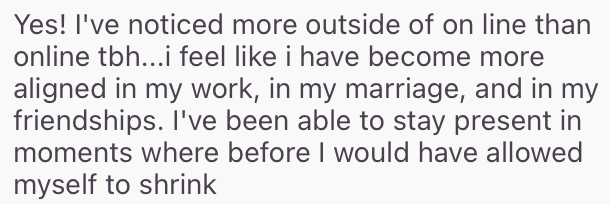
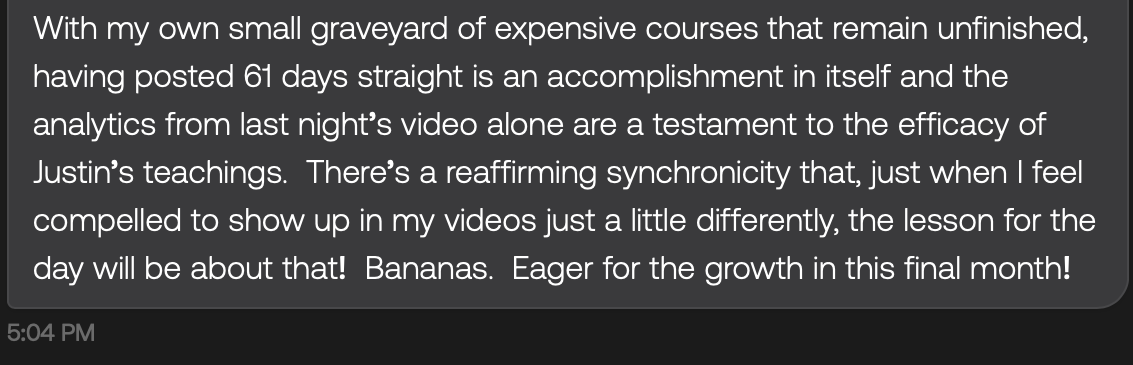
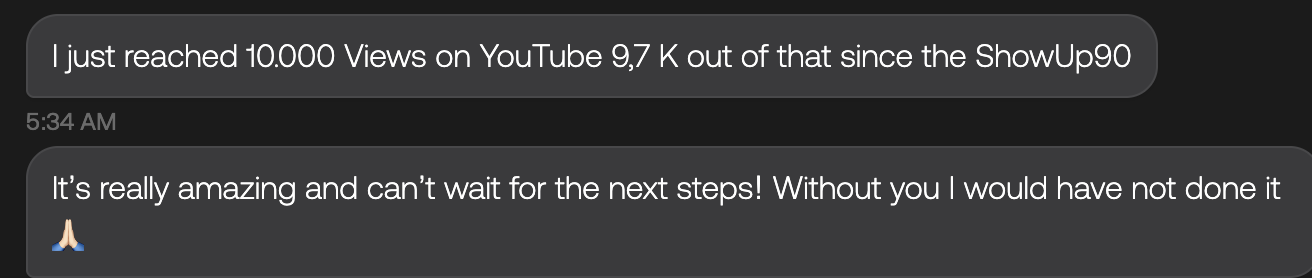
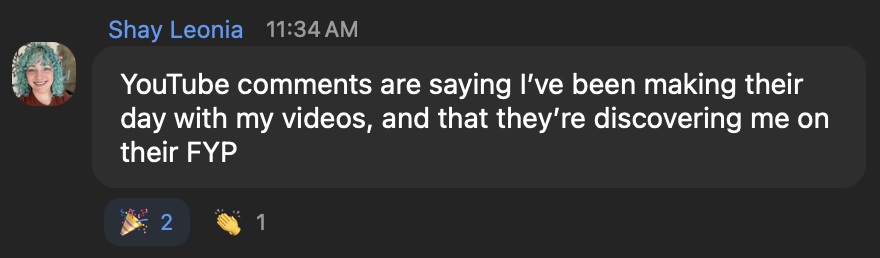
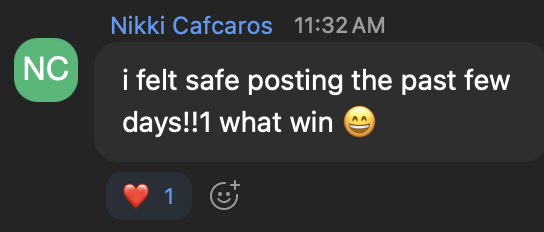
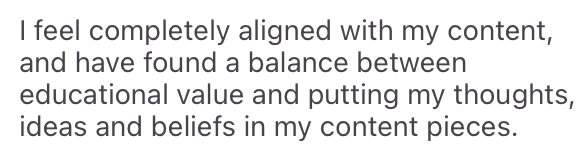


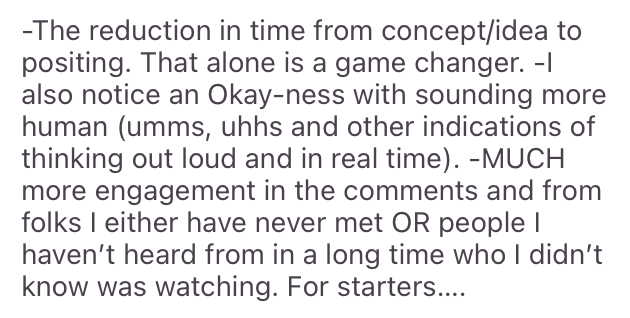

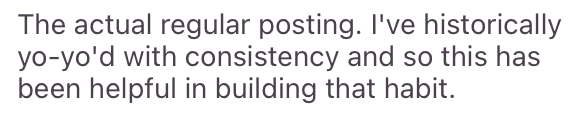
Participant experiences vary. Testimonials are examples only, not guarantees. ShowUp90 does not guarantee follower growth, sales, revenue, leads, virality, confidence, personal transformation, or any specific outcome.
Where ShowUp90 students show up from
10+ countries. Four continents. The work is the same everywhere.
The contract
Payment plan: 3 × $697. Total paid = $2,091. Day 91 cashback = $1,997.
The truth is not everyone is going to finish. Their $1,997 funds the program. Yours, if you finish, comes back to you.
Cashback isn't tied to views, follows, leads, or sales.
I would rather make money on something that works than profit on something that doesn't.
Every cashback payment I send on Day 91 is the program working.
Frequently asked
Yes. Most people in ShowUp90 are running something — coaching, consulting, creative work, a service business, a company. The premise is simple: being seen as yourself makes people trust the work. You're not posting like a brochure. You're showing up as the person behind it, and the business comes with you. That's how I built mine. It can build yours too.
It isn't structured like a content course. There's no script template, no posting calendar, no algorithm playbook. The work happens at the level of the freeze itself — the part of you that won't let you hit post.
"It's more on the therapy side than the content side — which I think feeds into the content side."— April Payne, ShowUp90 Graduate
Of course. Post your business content, your reels, your photo dumps — whatever you already do or want to do. For the bet, what counts toward your 85 is one face-to-camera video per day responding to that day's prompt. Everything else you post is extra, and welcome. ShowUp90 doesn't replace your content. It puts a non-negotiable rep at the floor of it.
Post in whatever language is yours. ShowUp90 students post in Hebrew, German, Spanish, and more — and we've reviewed videos in all of them in office hours, translation open, the whole room watching the work together. The thing we're looking at — pacing, energy, presence, the place the story stopped letting us in — doesn't speak any particular language.
Yes. Three payments of $697 — total paid = $2,091. Same bet, same terms. Day 91 cashback = $1,997.
Especially then. The freeze isn't about reach — it's about hitting post. People with 200 followers and people with 200,000 hit the same freeze. Audience size changes the results later. Not the rep today.
No. That defeats the purpose of the program. You get five built-in misses because life will happen. The point is not to find 90 perfect days. The point is to become someone who can show up inside the life you actually have.
Also worth knowing: you start the day after you buy. No perfect Monday. No clean runway. We send onboarding the moment you check out; Day 1 is tomorrow.
Then be responsible. You never have to share private client details, employer secrets, screenshots, names, numbers, or anything unsafe. This is not a dare to blow up your life. The rep is being visible, not being reckless. Tell the truth at the level you're allowed to tell it.
A lot of people do. They finish the 90 and roll their cashback into the next thing — 1:1 creative direction, a strategy session with me (only open to past ShowUp90 participants), or whatever makes sense then.
If that's where you land on Day 91, we'll talk. But that decision is yours to make on Day 91, not Day 1. Take the bet first. Win it. Then decide.
If you already know this is the thing —
if being seen would change your life and hiding is starting to cost too much —
take the bet.
Pay $1,997.
Post 85 of 90 days.
Attend 3 office hours.
Day 91, get it all back.
What you'll have is 85 posts on the internet that didn't exist before — and a version of yourself that didn't exist before either.
The version that hits send.
The version that says the thing in the room.
The version your work was waiting for.
The money comes back.
The other thing is what you keep.
You are one video away.
But only if you press record.
90 days from now, you're either the person who did — or the person who still hasn't.
I'm betting two grand it's the first one. I want to lose.